• Post Reply Bookmark Topic Watch Topic
  • New Topic
permaculture forums growies critters building homesteading energy monies kitchen purity ungarbage community wilderness fiber arts art permaculture artisans regional education skip experiences global resources cider press projects digital market permies.com pie forums private forums all forums
this forum made possible by our volunteer staff, including ...
master stewards:
  • Carla Burke
  • John F Dean
  • Nancy Reading
  • r ransom
  • Jay Angler
  • Timothy Norton
stewards:
  • paul wheaton
  • Pearl Sutton
  • Anne Miller
master gardeners:
  • Christopher Weeks
  • M Ljin
gardeners:
  • Jim Garlits
  • thomas rubino
  • William Bronson

How to install metal roofing to reduce the noise factor?

 
master steward
Posts: 15687
Location: Pacific Wet Coast
10058
duck books chicken cooking food preservation ungarbage
  • Likes 9
  • Mark post as helpful
  • send pies
    Number of slices to send:
    Optional 'thank-you' note:
  • Quote
  • Report post to moderator
Metal roofing has a bunch of things to recommend it in my climate:
1. Our UV index has been climbing, and asphalt shingles *really* don't last well.
2. Our droughts have been more extreme when they happen, so catching rainwater is a target, and metal roofing is recommended for that.
3. It's hard to know what toxins might be in some of the alternatives that I've read about.
4. It's even harder to know how recyclable many of the alternatives are.

However, everything I read about metal roofs that's being up-front and honest, says that they're noisy. I understand why. Even on our old shingle roof, if we have really heavy rain in the night it can wake me. So I figured Permies was the place to ask. There has to be some ways to fix or reduce this problem, and I need to explore that now before the roof needs replacing, as I'm pretty sure the answer will be - noise dampening needs to be part of the installation!

So what do my fellow permies think? What crazy ideas can we come up with, that might help stop metal roofs from becoming snare drums in rainstorms?
 
master steward
Posts: 8676
Location: southern Illinois, USA
3546
goat cat dog chicken composting toilet food preservation pig solar wood heat homestead composting
  • Likes 6
  • Mark post as helpful
  • send pies
    Number of slices to send:
    Optional 'thank-you' note:
  • Quote
  • Report post to moderator
In MN had an aluminum roof.   Insulation ranged from 12” to 36”.   It was loud in a heavy rain.  That said, my wife and I loved the sound.  Then again, we once lived next to a railroad yard, and we loved that noise as well.
 
Rusticator
Posts: 9830
Location: Missouri Ozarks
5436
7
personal care gear foraging hunting rabbit chicken cooking food preservation fiber arts medical herbs homestead
  • Likes 7
  • Mark post as helpful
  • send pies
    Number of slices to send:
    Optional 'thank-you' note:
  • Quote
  • Report post to moderator
To the best of my knowledge, based on the bit of insulation that I need to stuff back up, in the garage, our insulation is 6" or 8" thick. The roof is loud - sometimes, so loud we can't hear anything else - no stereo, no tv, etc, even talking. But like John and his wife, we don't actually mind it. In fact, I often enjoy it, and it gives me an excuse to get off the phone, at times.
 
Jay Angler
master steward
Posts: 15687
Location: Pacific Wet Coast
10058
duck books chicken cooking food preservation ungarbage
  • Likes 7
  • Mark post as helpful
  • send pies
    Number of slices to send:
    Optional 'thank-you' note:
  • Quote
  • Report post to moderator

John F Dean wrote:... It was loud in a heavy rain.  That said, my wife and I loved the sound...


Alas, both my son and I tend to be on the noise sensitive side. I like the sound of rain, but we can get some really heavy downpours which may be a problem.

That said, my son is hoping to put solar panels on the roof. Is that going to reduce the noise?
 
pollinator
Posts: 2937
Location: RRV of da Nort, USA
915
  • Likes 9
  • Mark post as helpful
  • send pies
    Number of slices to send:
    Optional 'thank-you' note:
  • Quote
  • Report post to moderator
We moved into our present home (2-story, 1915-build) with ailing asphalt shingles.  A few storms after the move and we qualified by insurance for a new roof.  That was about 2 decades ago and the roof we had installed was a steel, painted roof with interlocking panels.  I can't recall for sure at the moment about whether they added extra insulation before adding the roof panels, but I know they did not remove the shingles.  What I can say from having multiple steel buildings on our property, all with non-insulated roofs, is that a non-insulated roof is REALLY noisy with rain (hail is deafening!).  With that as background, I can honestly say that our home roof is nearly silent in a rain storm and really only moderately audible under hail.  Since you are in the PNW where rainshowers appear with the regularity of the sun rising in the morning, I would recommend finding someone in your area who has a metal-roof-on-insulated-wooden-subroof home and see if you can't schedule a visit during a good shower.  We are nearly certain that we will not have to replace this roof in our lifetime in the house and that it could last a good few decades after we depart.  I highly recommend metal roofs as replacements for asphalt whenever asked.  Good luck on your decision, Jay!

Edit;  Forgive me for copy/paste from AI, but this answers a question for me on why a metal roof on shingles is quieter than metal alone:

"A metal roof installed directly over existing shingles is quieter because the old shingle layer acts as a built-in sound barrier. It absorbs impact energy, prevents the metal from vibrating like a drum, and adds a thick layer of mass that deadens the sound of rain.Why Installing Over Shingles Muffles the SoundVibration Dampening: Metal alone (especially if installed over open-frame rafters) vibrates and amplifies sound like a drum. The underlying shingles press flush against the metal, restricting this vibration.Impact Cushioning: The coarse, granulated texture of asphalt shingles creates a physical cushion that softens the initial strike of raindrops.Mass & Density: The combined mass of the metal, old shingles, underlayment, and roof decking creates a thicker barrier that sound waves must penetrate, making the interior much quieter."
 
steward & bricolagier
Posts: 16210
Location: SW Missouri
12576
2
goat cat fungi books chicken earthworks food preservation cooking building homestead ungarbage
  • Likes 7
  • Mark post as helpful
  • send pies
    Number of slices to send:
    Optional 'thank-you' note:
  • Quote
  • Report post to moderator
" prevents the metal from vibrating like a drum, "  that part makes me think a way to stop the noise might be to keep it from vibrating. The roofing on this rental has standing seams (and you put the screws through the STANDING SEAMS! NOT the flat parts! That's how you keep them from leaking!!) and normally you'd only put screws in every 4th one or so space 24 inches or so apart. Wonder what it would if you put screws at 12 inch spacing on every standing seam, and make it so it can't vibrate? The basic asphalt felt you put under a roof might be enough to dampen the bounce against the roof. Might be interesting to try. Screws are cheaper than anything else you can do to a roof.

Anyone got a shed with standing seams that could be tried on? Go up and add a bunch of screws, see what it does to the sound. Lots of us are interested in knowing.
 
pollinator
Posts: 1810
Location: Victoria BC
329
  • Likes 9
  • Mark post as helpful
  • send pies
    Number of slices to send:
    Optional 'thank-you' note:
  • Quote
  • Report post to moderator
I put a clicklock style standing seam metal roof on my new-to-me 1950s house, over a new 5/8" plywood roof deck. I like the clicklock as it is DIY friendly, unlike the crimped standing seam. Just needed basic tinsnips and a homemade bender to make the locking bend at the bottom.

We insulated the attic with rockwool to the depth of the ceiling joists; 5.5" or 7.25 depending in area. Carefully cut to fit all the weird little pockets the trusses and blocking create.

Then we blew 16"+ of cellulose on top of that. This should be at least R55, before accounting for the rockwool. Around R80 combined.

We can barely hear a heavy rain after this. Downstairs, through the insulated floor, it is entirely inaudible.


In my tinyhouse, the roof was originally only insulated to R22 with rockwool. 3/4" subfloor OSB for the ceiling helped keep the noise reasonable. Through-fastened steel roofing.

I redid it a few years ago to around R50 rockwool with a clicklock roof, and it is noticeably quieter. Definitely still louder than the house.

At no point was it loud enough to annoy me..
 
Jay Angler
master steward
Posts: 15687
Location: Pacific Wet Coast
10058
duck books chicken cooking food preservation ungarbage
  • Likes 4
  • Mark post as helpful
  • send pies
    Number of slices to send:
    Optional 'thank-you' note:
  • Quote
  • Report post to moderator

Pearl Sutton wrote:... The basic asphalt felt you put under a roof might be enough to dampen the bounce against the roof. Might be interesting to try. ...


I would say that old shingles are much thicker than a single layer of asphalt felt, and that even the felt comes in different thicknesses. I have heard that mass more than anything else, absorbs sound, so if shingles had to be removed, I would go for several layers of the thickest felt I could get, unless someone tells me they tried that and it didn't work.
 
Pearl Sutton
steward & bricolagier
Posts: 16210
Location: SW Missouri
12576
2
goat cat fungi books chicken earthworks food preservation cooking building homestead ungarbage
  • Likes 7
  • Mark post as helpful
  • send pies
    Number of slices to send:
    Optional 'thank-you' note:
  • Quote
  • Report post to moderator

Jay Angler wrote:

Pearl Sutton wrote:... The basic asphalt felt you put under a roof might be enough to dampen the bounce against the roof. Might be interesting to try. ...


I would say that old shingles are much thicker than a single layer of asphalt felt, and that even the felt comes in different thicknesses. I have heard that mass more than anything else, absorbs sound, so if shingles had to be removed, I would go for several layers of the thickest felt I could get, unless someone tells me they tried that and it didn't work.


Ah, I thought you were talking putting a whole new roof structure etc on.

D Nikolls wrote: I put a clicklock style standing seam metal roof on my new-to-me 1950s house, over a new 5/8" plywood roof deck. I like the clicklock as it is DIY friendly, unlike the crimped standing seam. Just needed basic tinsnips and a homemade bender to make the locking bend at the bottom.


I had to look them up. Yes the DIY type is the type I have used. hadn't heard it called clicklock.  The basic cheap stuff from the big box stores, with ridges, that you put on.  I know about the really old style and/or expensive type, never used it or dealt with it.
 
pollinator
Posts: 6151
Location: Bendigo , Australia
579
plumbing earthworks bee building homestead greening the desert
  • Likes 7
  • Mark post as helpful
  • send pies
    Number of slices to send:
    Optional 'thank-you' note:
  • Quote
  • Report post to moderator
I am often building metal roofs on my small farm.
The noise is music to me!
But insulation in various forms is available, one is a twin layer of fibreglass or earthwool  which sits directly against the
roof sheet and sisalation. It prevents condensation and reduces the music level.
 
gardener
Posts: 345
Location: Austin, Texas
172
9
tiny house building homestead
  • Likes 7
  • Mark post as helpful
  • send pies
    Number of slices to send:
    Optional 'thank-you' note:
  • Quote
  • Report post to moderator

Jay Angler wrote:That said, my son is hoping to put solar panels on the roof. Is that going to reduce the noise?


We have a metal roof with solar panels and the noise is pretty minimal. Also, I've also found rock wool very effective for sound dampening.
 
steward
Posts: 19137
Location: USDA Zone 8a
4829
dog hunting food preservation cooking bee greening the desert
  • Likes 8
  • Mark post as helpful
  • send pies
    Number of slices to send:
    Optional 'thank-you' note:
  • Quote
  • Report post to moderator
I have a metal (steel) roof.  Mine is not noisy.  I can barely hear it when we have a hard rain.

We insulated with blown in cellulose insulation.

The roof might have been noisy while we were building and before the insulation.
 
pollinator
Posts: 1016
Location: Porter, Indiana
180
trees
  • Likes 7
  • Mark post as helpful
  • send pies
    Number of slices to send:
    Optional 'thank-you' note:
  • Quote
  • Report post to moderator
An unsupported metal roof is going to be noisy. My shipping container gets quite loud when it rains, and a shed having minimal supports for the metal roof is going to be noisy.

In contrast, a metal roof firmly anchored to wood decking is going to rather quiet. At my old house, I installed a metal roof on wood decking  and it was just as quiet as the old asphalt shingles.
 
Posts: 68
Location: 10a
32
dog cooking woodworking
  • Likes 6
  • Mark post as helpful
  • send pies
    Number of slices to send:
    Optional 'thank-you' note:
  • Quote
  • Report post to moderator

Jay Angler wrote:What crazy ideas can we come up with, that might help stop metal roofs from becoming snare drums in rainstorms?


Well.. if "Crazy Ideas" are fair game, here... First thing that came to my mind (besides - of course - 'industrial-roof grade felt' was, well...Intentional Moss. (and, I see that it Might not be The stupidest idea on the internet, afterall..

https://www.youtube.com/watch?v=EhmifPCnxF0 Hmmm.. So.. "Doable", but.. 'Practical'? I dunno, but.. My thoughts would be:

- I see the 'Practicality' of this idea being 'Size Related'.. Ergo: If your place is a Smallish Cabin, and the Roof isn't Too monsterous, well.. Maybe this could work (it Certainly would be Gorgeous / Cool (literally, too..  
 but if you've got a 4000 sq ft 'McMansion', well.. Maybe not so much practical.

- I also (having Installed Roofing quite a few times back in the 'Kitchens & Baths days', including Rework, etc) always think of Serviceability, down the road...

ie: What if an 'Uninvited Tree-Branch Visit' during a bad storm necessitates a roof repair - Or someday just presents with your 'garden-variety roof-leak' - Methinks trying to suss-out a leak and/or do a repair on a Mossy-Roof - might just lead to ripping it all off.. Or, perhaps your Better Half spots / falls in love with those Awesome Fiber Optic Solar Skylights and they Just Have to Have them, Now.. etc, etc, etc..

Regardless, it Certainly would present a unique 'Safety-challenge' for the Roof-climber, so.. Just thinking ahead, here.

But.. I'm Also betting it would be about the Quietest and Prettiest Roof on the block - Maybe even the whole durn State.  Just a 'crazy' thought.
 
Jay Angler
master steward
Posts: 15687
Location: Pacific Wet Coast
10058
duck books chicken cooking food preservation ungarbage
  • Likes 4
  • Mark post as helpful
  • send pies
    Number of slices to send:
    Optional 'thank-you' note:
  • Quote
  • Report post to moderator

jd hutton wrote: Well.. if "Crazy Ideas" are fair game, here... :) First thing that came to my mind (besides - of course - 'industrial-roof grade felt' :) was, well...Intentional Moss. (and, I see that it Might not be The stupidest idea on the internet, after all.. ;)  


I have adored moss for a very long time, and in the right location, the video's approach of matching metal roofing with chicken wire seems like a decent possibility. Both the wire and the moss might go a long way towards softening the "tree branch" blow you mentioned also.

That said, I am *not* in the right climate - we're too dry all summer and on a house roof, I suspect it would be too hot and dry for survival.

However, I will also mention from the video - the fellow was screwing the roof to the plywood in the "gullies" rather than using longer screws through the "peaks". In my climate, that's pretty much guaranteed to let water in sooner rather than later! That unfortunately, doesn't give me confidence in the rest of what he's doing. What ecosystem did he try this in? What size of a roof? Did it work better on the north side than the south side? Did he water it during droughts?

It is food for thought!
 
jd hutton
Posts: 68
Location: 10a
32
dog cooking woodworking
  • Likes 2
  • Mark post as helpful
  • send pies
    Number of slices to send:
    Optional 'thank-you' note:
  • Quote
  • Report post to moderator

Jay Angler wrote:
I have adored moss for a very long time, and in the right location... seems like a decent possibility.


Indeed, and, again - I think a Lot of the 'doability' - and future Serviceability - would be driven by the Size of the roof / area to be Mossified.

Jay Angler wrote:That said, I am *not* in the right climate...


Bummer, but an Important consideration - Last thing you want is to end up with a House-top made of Tinder..  (O_O)  

Jay Angler wrote:However, I will also mention from the video...


Yah, I meant no particular 'endorsement' of that guys Vid It was just the first one that showed the 'Concept' I was envisioning / had heard of from others..  Sort of like trying to 'partially Wofati when you Can't fully Wofati'..

Cheers / Godspeed to whatever you end up with (felt / steel-over-shingles sounds like the best bet, thus far..

 
John F Dean
master steward
Posts: 8676
Location: southern Illinois, USA
3546
goat cat dog chicken composting toilet food preservation pig solar wood heat homestead composting
  • Likes 1
  • Mark post as helpful
  • send pies
    Number of slices to send:
    Optional 'thank-you' note:
  • Quote
  • Report post to moderator
Hi Jay, over the decades I  have heard much debate as to if the fasteners should be in the peaks or valleys of a metal roof.  
 
Jay Angler
master steward
Posts: 15687
Location: Pacific Wet Coast
10058
duck books chicken cooking food preservation ungarbage
  • Likes 5
  • Mark post as helpful
  • send pies
    Number of slices to send:
    Optional 'thank-you' note:
  • Quote
  • Report post to moderator

John F Dean wrote:Hi Jay, over the decades I  have heard much debate as to if the fasteners should be in the peaks or valleys of a metal roof.  


I can see merit in both approaches. However, living in the Pacific wet coast, where we get rain from November through to January as a minimum, the general consensus is fasteners through the peaks for this ecosystem. The winter rain is balanced by very high UV index during our long, dry summer days, which is hard on those special washers that are supposed to keep water out.
 
John Weiland
pollinator
Posts: 2937
Location: RRV of da Nort, USA
915
  • Likes 4
  • Mark post as helpful
  • send pies
    Number of slices to send:
    Optional 'thank-you' note:
  • Quote
  • Report post to moderator

Jay Angler wrote:...........Living in the Pacific wet coast, where we get rain from November through to January as a minimum, the general consensus is fasteners through the peaks for this ecosystem. The winter rain is balanced by very high UV index during our long, dry summer days, which is hard on those special washers that are supposed to keep water out.


I can't recall just now, Jay, if you are planning at this point of going right over your current shingles with a potential metal replacement.  However, if you are having this done by a roofing contractor and using 'standing seam' type panels, the issue of rain and UV will be mitigated by panel engineering.  A quick perusal of the current tech is that either a clip or built-in flange is used the anchor the panel edge to the roof and is then hidden under the adjacent panel that is clipped into place.  Thus, no screw/nail-heads are exposed to water (or minimally so) or UV.  As I look up at our own house roof, I can see no nail or screw heads visible, so this must have been in use even a few decades ago when ours was installed.  We have for sure sustained 60 -70 mph winds with this roof with no visible damage...the mild pock-marks from bad hailstorms are not a bother to us.  Our main water concern which has not reared its head so far would be forced penetration of water *under* the standing seam on account of freeze-thaw snow dams that form on the roof throughout the winter.  Outside of these main points concerning roof integrity, our only other issue has been the fact at we don't have 'snow cleats' on the roof to hold the snow in place:  With a 45 degree angle on the roof slope, snow backs up from the gutters until the load becomes too great....then it all comes sliding off at once, ripping out gutters and clobbering anything below.  That's been a tolerable irritation in an otherwise good decision for us on our home roofing.
 
Jay Angler
master steward
Posts: 15687
Location: Pacific Wet Coast
10058
duck books chicken cooking food preservation ungarbage
  • Likes 4
  • Mark post as helpful
  • send pies
    Number of slices to send:
    Optional 'thank-you' note:
  • Quote
  • Report post to moderator

John Weiland wrote: I can't recall just now, Jay, if you are planning at this point of going right over your current shingles with a potential metal replacement.


John, what I'm working on right now is figuring out what "best practices" are. My son is in the process of house hunting, and to some extent will have to take what they can get that ticks enough of the boxes on their "essential" list while still fitting under their "budget" list.

One house they looked at had a metal roof, and the previous owners had built an extension with an asphalt roof. That got me thinking about past readings about noisy metal.  However, I'm sure there are *lots* of permies who go for metal for longevity, recyclability, and rainwater capture, so I figured that if I started a thread here, I would get lots of user-test-results.  I have, and I greatly appreciate all this first hand experience. I feel like I am in a much better position to evaluate metal roofs on houses they look at, and what we can do, depending on the house design, to quiet the roof if needed.

In my ecosystem, it seems as if asphalt roofs are lasting for shorter and shorter periods, and are a big problem for disposal of old shingles. If we want more people shifting to metal, we need to make sure it's user friendly. I'm pretty sure it already is more expensive, and doing it right is likely more expensive yet. However, when you take in longevity and reliability, if/when my son needs to put a new roof on the house they buy, they will be far further ahead to follow the advice in this thread.

I really, really, appreciate the input from everyone! Thanks to all of you!
 
jd hutton
Posts: 68
Location: 10a
32
dog cooking woodworking
  • Likes 6
  • Mark post as helpful
  • send pies
    Number of slices to send:
    Optional 'thank-you' note:
  • Quote
  • Report post to moderator

Jay Angler wrote:...living in the Pacific wet coast, where we get rain from November through to January....balanced by very high UV index during our long, dry summer days, which is hard on those special washers that are supposed to keep water out.


A solution - though, granted, "extra work" would be to lay-down a 'ring' - then 'finger-sculpt it tight' (ie: the way you do for caulk on a bathtub, etc) - of RTV Silicone < link to example..) around Each of those self-tapper / washer combos - Which would serve to both 'protect' those washers from the UV, and provide an Excellent, super weather / sun-proof Additional seal around all those punctures. (and, once it's fully cured, won't 'leech' anything bad into yer catchment-water)

"Overkill"? Maybe from Some perspectives, but.. To Me, that's one of those 'Ounce of Prevention...' things that may 'cost more' in cash / labor upfront - but 'pay dividends', later in durability. I have personally seen this technique work Very well on (granted) smaller applications, but.. It should 'scale'.

RTV is also the cat's pj's when it comes to sealing any 'accessory / mount-holes', etc in yer RV / trailer / Camper-van Roof, etc - Really, Any place water needs to be kept Out on passthrus / holes, etc - RTV is yer Hero.

Fwiw..
 
John C Daley
pollinator
Posts: 6151
Location: Bendigo , Australia
579
plumbing earthworks bee building homestead greening the desert
  • Likes 6
  • Mark post as helpful
  • send pies
    Number of slices to send:
    Optional 'thank-you' note:
  • Quote
  • Report post to moderator
I can share from Australia, that no special needs apply to the washers on roofing screws.
Also, we always apply the screws on the peaks of corrugated roofing. Never the vally.
I dont know if snow will build up on exposed screw heads, but roofing with the concealed fixing would solve that issue if it exists.
 
John C Daley
pollinator
Posts: 6151
Location: Bendigo , Australia
579
plumbing earthworks bee building homestead greening the desert
  • Likes 6
  • Mark post as helpful
  • send pies
    Number of slices to send:
    Optional 'thank-you' note:
  • Quote
  • Report post to moderator
I just researched this, google;
"Best Practices for Snow Country
Panel Style: In heavy snow areas, concealed-fastener roofs (like standing seam) are highly recommended because they present a completely smooth surface and keep fasteners completely hidden from snow and ice.
Screw Placement: On exposed-fastener (screw-down) metal roofs, screws should always be driven into the flat pan of the metal rather than the ribs, ensuring the rubber washer sits flush to create a proper, leak-proof seal.
Snow Retention: If you are experiencing heavy snow buildup or sudden, dangerous roof avalanches, installing a properly engineered snow retention system is the most effective way to protect your roof's screws and fixtures from sudden shear forces."
I amazed at the problems you are having in North America with metal roofs.
"Understanding Snow and Fastener Interaction
Obstruction: The raised screw heads and their gaskets create microscopic ledges. As snow slowly shifts or melts down the roof, it catches on these hardware bumps.
Fastener Stress: As accumulated snow freezes and thaws, it expands and bonds to the roof. When heavy snow blankets slide down, the immense shear weight pulls directly on these screws, which can eventually cause fasteners to loosen or back out.
Leak Risk: Because metal roofs expand and contract with temperature changes, shifting snow and loose screws can degrade or crack the rubber washers over time, opening up entry points for water."
 
steward
Posts: 16188
Location: Northern WI (zone 4)
5288
9
hunting trees books food preservation solar woodworking
  • Likes 6
  • Mark post as helpful
  • send pies
    Number of slices to send:
    Optional 'thank-you' note:
  • Quote
  • Report post to moderator
According to my memory of the metal roof installation guide for Menards brand metal roofing, you put the screws through both the ridges and the flats depending on where you are on the sheet.  You put it through the ridges everywhere except:
  - The top and bottom of the panel (I believe this is so that the sheet doesn't get squished out wider at the ends and then not stay parallel. It's very easy to overtighten those screws and make the panel wider)
  - The edge that is overlapping the previous panel ( Putting them through the flat here helps hold down the neighboring panel. Going through both ridges is a bit tricky and probably can cause other mischief)

I used the standing seam (hidden fastener) roofing on my last project and loved it so if you have a few extra bucks, definitely go that way.
 
jd hutton
Posts: 68
Location: 10a
32
dog cooking woodworking
  • Likes 5
  • Mark post as helpful
  • send pies
    Number of slices to send:
    Optional 'thank-you' note:
  • Quote
  • Report post to moderator

John C Daley wrote:
I amazed at the problems you are having in North America with metal roofs.


As with Much in Life, 'Context is King' Given Sir Jay's 'context' (the 'Pacific North Wet', as he aptly calls it) Water intrusion - whether from just-plain Spring / Summer Deluges, or from many Freeze/Thaw Cycles over Winters - is more of a concern.

But, for Others (like myself - and perhaps You - Not sure Where 'Down Unduh' you are Been a Lifelong Dream of mine to Live in AU, btw.. ) but obviously, there are Many regions that don't see much Rain for a spell - Same Here (AZ)

EDIT: I now see, 'Bendigo' - Noice.  So, if the 'Homework' is correct, ya's get about 20 - maybe 30" of Rain - Annually? - is that Correct?  If so - I'd bet there's Some months the 'PNW' gets that inside a Month. Some areas there get over 140 inches Annually - while others, only ~20, so, again.. "Context"

Thus, for those who live where it's only an 'Occasional gully-washer' - perhaps just using the 'OEM' washers is sufficient. But - for someone in the 'Pacific North Wet', well.. Again, the 'Ounce of Prevention...' principle would seem to apply - in That Context.

Leak Risk: Because metal roofs expand and contract with temperature changes, shifting snow and loose screws can degrade or crack the rubber washers over time, opening up entry points for water."


..And thus, again - RTV's yer Uncle.
 
John C Daley
pollinator
Posts: 6151
Location: Bendigo , Australia
579
plumbing earthworks bee building homestead greening the desert
  • Likes 6
  • Mark post as helpful
  • send pies
    Number of slices to send:
    Optional 'thank-you' note:
  • Quote
  • Report post to moderator
jd, Bendigo central Victoria.
Rainfall about 16-18 inches per year.
Temp. -3 to 45 deg celcius.
No snow
 
jd hutton
Posts: 68
Location: 10a
32
dog cooking woodworking
  • Likes 5
  • Mark post as helpful
  • send pies
    Number of slices to send:
    Optional 'thank-you' note:
  • Quote
  • Report post to moderator

John C Daley wrote:jd, Bendigo central Victoria.
Rainfall about 16-18 inches per year.
Temp. -3 to 45 deg celcius.
No snow


Sounds Great! Where do I sign up?
 
John C Daley
pollinator
Posts: 6151
Location: Bendigo , Australia
579
plumbing earthworks bee building homestead greening the desert
  • Likes 7
  • Mark post as helpful
  • send pies
    Number of slices to send:
    Optional 'thank-you' note:
  • Quote
  • Report post to moderator
jd, you need to speak English, ride a motorcycle,  patriotism is not present, voting is compulsory, we drive on the correct side of the road,
football is played without armour and does not stop and a knowledge of cricket helps.
 
pollinator
Posts: 1629
Location: Zone 6b
241
goat forest garden foraging chicken writing wood heat
  • Likes 5
  • Mark post as helpful
  • send pies
    Number of slices to send:
    Optional 'thank-you' note:
  • Quote
  • Report post to moderator
Metal roofing is the best. I wouldn't have any other kind, given any choice at all (we have metal roofing on this house). But I have to admit that I have no solution for the noise - because I don't care! I love the sound of rain on a metal roof, and sometimes regret the insulation in the roof that does mute the sound somewhat. I may change my mind if we ever have a really bad hailstorm, although we did have some pretty good-sized hail a few months ago, and it wasn't any worse than heavy rain. The funniest thing we've had make a noise on the roof was last fall when, in the fairly-early morning, several buzzards were perched up there! Those are big birds with big toenails!
 
pollinator
Posts: 871
Location: Clemson, SC ("new" Zone 8a)
213
11
  • Likes 7
  • Mark post as helpful
  • send pies
    Number of slices to send:
    Optional 'thank-you' note:
  • Quote
  • Report post to moderator

Jay Angler wrote:That said, my son is hoping to put solar panels on the roof. Is that going to reduce the noise?


I am certain that it would reduce the noise, yes.  Not eliminate noise, but you will be adding a whole layer of material to shield the roof from pounding rain, plus an air gap.  The panels will be mounted on rails, and the rails are mounted on brackets spaced out every few feet, which are in turn screwed into the roof.  So, the physical connections between panel and roof through which vibrations will travel are minimal.  The flat roof metal is the vibrating membrane that generates the sound, and you are removing it by several steps from the impact of the rain.  Whereas the PV panels themselves are much thicker and comprise multiple layers of material; they just aren't going to vibrate in the same way.

I have PV panels... but not on the roof of the same structure in which I'm currently living.  So I can't say I speak from direct experience, but I'm confident in this conclusion.

Having said all that, I like the sound of rain on my metal roof.  The little building in which I live also has a metal roof, and I never find the sound of rain too loud.  I have blown as much loose cellulose into my attic as possible, which I'm sure helps a bit.  Mostly, though, it is mass that deadens sound, not insulation.

I was surprised to note some commentors above describing structures in which the metal roof spans between bare rafters.  I've never heard of that, except in a barn.  Yes, I can imagine in such a structure the noise would be intense, since you've literally created a drum with your roof panels with no deadening material in direct contact at all.  My metal roof is secured firmly to an OSB roof deck that spans the rafters (or trusses, in my case), plus a layer of synthetic underlayment between metal and wood.
 
Posts: 64
Location: Mason County, WA USA:Ha; Harstine gravel ashy sandy loam
43
duck rabbit chicken medical herbs bee solar wood heat rocket stoves
  • Likes 10
  • Mark post as helpful
  • send pies
    Number of slices to send:
    Optional 'thank-you' note:
  • Quote
  • Report post to moderator

I was surprised to note some commentors above describing structures in which the metal roof spans between bare rafters.  I've never heard of that, except in a barn.  Yes, I can imagine in such a structure the noise would be intense, since you've literally created a drum with your roof panels with no deadening material in direct contact at all.


The drum analogy conveys a lot, Matthew!
I am in the same general PNW climate as Jay with lots of steady rain - a sound that I enjoy, but much less charming when highly amplified!

I'm currently working out the acoustics mitigation while building out both a metal kit building (half work room / half greenhouse) and a hoophouse covered with PVC material. They both receive a direct rain drop that forms a bubble, then conveys and expands sound.  Using my laptop as a testing device with website https://youlean.co/online-loudness-meter/ during a light rain on the hoophouse, the sound measured about 85 decibels (city traffic level of noise) in the interior.  Sustained exposure in the range of 90dB initiates hearing loss. Bummer. It wasn't even raining hard when I tested this. Goal for this hoophouse is to have a small workroom divided off on one end, and rabbit / chicken (Joel Salatin's raken house) on deep litter in the remaining 75% of the structure. Too loud for rabbits.

The sound mitigation and the thermal insulation and water condensation typical of these structures are all factors that have to be managed, and the resolutions need to work together. Working with Claude.ai, I researched and compared various sound dampening options. Attaching the options list below.  Of note (and not relevant to a typical metal roof) is that the top third of the arch produces the huge majority of the noise. The oblique angle of rain on the other two thirds sides does not generate the same bubble formation and noise. Sound range of rain generates more low frequency, so mitigation needs to block that.

In the top of the hoop house, I put cattle panels within the upper arch curve as snow load protection (and it snowed 3 inches within a week of putting those up there, so it was a good test...). The exterior PVC fabric on the outside of the arch is about 2-3 inches away from the cattle panels - it leaves an air gap that disconnects the sound transmission. The cattle panels provide a way to easily attach a layer of mass loaded vinyl on top of them. The vinyl  will not deteriorate or mold under the influence of any water condensation. Attaching to underside of cattle panels will be a layer of rockwool. Both of these dampen  / block sound transmission and reflection. These mitigations are only for the top third of the hoop house.  (See layered description attached)

Within the full hoop house interior (after the sound mitigation materials are in place), double bubble insulation, with the reflective side outward, is being attached in sections, covering the space between each arch and the next. This serves as a thermal insulation, with a water condensation barrier to keep from dripping into the interior, and a small amount of sound insulation. By taping this down to the arches, the sound transmission is blocked from one bay to the next along the structure. The bottom is being left open to allow water condensation to drain outward.  

This build is in process now, and there is no clear data yet on how well this is really going to work for sound mitigation - so take any of these ideas with a grain of salt. Once it is all installed, I can post some pics and measurement of the next rainstorm's interior dB level... If any of you have already tried this or something functionally similar, and can offer some advice with these materials or strategies, I would love to hear about it.

For a metal roof like what Jay is considering, a similar interior layering could be applied. So far, I have been using butyl tape between ALL the panel joins and overlaps is a first step, making sure that the transmission of sound is interrupted at the edges of each panel.   Once the hoop house interior is done, I will be evaluating how well this works before finalizing a strategy for the metal building.

Keeping fingers crossed and continuing to look for successfully done comparables...

Acounstic_mitigation_DDX.png
[Thumbnail for Acounstic_mitigation_DDX.png]
Acoustic_Plan_Hoophouse.png
[Thumbnail for Acoustic_Plan_Hoophouse.png]
Hoophouse_Cattlepanels.jpg
[Thumbnail for Hoophouse_Cattlepanels.jpg]
 
gardener
Posts: 664
Location: Wheaton Labs, MT and Tularosa, NM
558
12
  • Likes 9
  • Mark post as helpful
  • send pies
    Number of slices to send:
    Optional 'thank-you' note:
  • Quote
  • Report post to moderator
I redid a section of roof at my mom's house a few years ago. I didn't aim for quieting the rain, but now the rain noise is only heard at the skylights.

There's a risk of pecan limbs falling on the metal, so I went with the thicker gauge metal. Slightly thicker decking dramatically increases the ability of the screws to hold the metal down in high winds, so I went with thicker decking. 1" of insulation is not enough in New Mexico,  so I went with about 18".

The end result of all that thickening is some much quieter rooms. Not sure if one part or other could be skipped with similar results.  When I want to hear the rain, I'll go hang out I the shed.
 
Posts: 32
Location: Pierce County WA, Northwest and Sound
9
cattle forest garden fungi chicken pig medical herbs bee sheep
  • Likes 7
  • Mark post as helpful
  • send pies
    Number of slices to send:
    Optional 'thank-you' note:
  • Quote
  • Report post to moderator
Howdy, superb topic.  Brakes and Roofing I leave to the best professionals I can find, as loss of either is final.  Just reroofed 24 year old house 2 years ago with architectural singles.  I wanted metal, but the contractor had an interesting take.  Much of the plywood, truss, vents needed to be changed first .  It seems modern houses have condensation issues?  A bit too airtight.  Interested in long term roof here in PNW.   22” snow in 4 hours to 112F roof surface temp same year…

Almost forgot, Wool.  Have sheared the sheep and left a large pile 6’ deep on swamp like ground, for a year (meant to burn it). Ive noted it has not molded nor degraded in fiber strength while I moved it in March.  German appliances, cars, use felted wool on panel interiors for noise reduction.  Problem maybe felting may remove natural oils that achieve this durability, but German engineering is legendary.  Cheers.
 
pollinator
Posts: 382
Location: New Mexico USA zone 6
84
3
  • Likes 8
  • Mark post as helpful
  • send pies
    Number of slices to send:
    Optional 'thank-you' note:
  • Quote
  • Report post to moderator
The roof on my house is over 4" of foam panel insulation, roofing felt, plywood, and R-11 fiberglass insulation. It's pretty loud when it rains - though we're in drought here in western NM so I don't care.

My barn roof has zero insulation, just the metal. Even a light drizzle sounds like a deluge.  I can't imagine what a hailstorm would sound like, but I know what it looks like: my horses would run out into the hail rather than stand under that roof when even the tiniest of white balls where slamming into the metal.

I have no idea how insulation could be installed underneath my barn's roof, but someday when I've got some spare $$$ I do plan to hunt around for some solution. I'd like to move my studio out there - as it is there's no way I could stand listening to that noise!
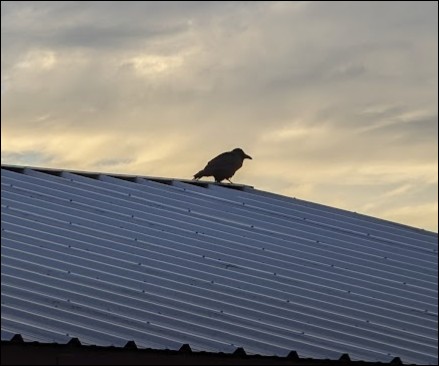
Raven-on-the-roof-_-LifStrandPhoto.jpg
Barn roof with raven
 
Posts: 353
24
9
  • Likes 6
  • Mark post as helpful
  • send pies
    Number of slices to send:
    Optional 'thank-you' note:
  • Quote
  • Report post to moderator
I have/carry several sets of ear plugs when the sound gets too loud like in the cinema,
church or when I am operating the jigsaw or garden shredder.

If I want to drown out the conversation from the next cubicle, I wear earphones and
listen to rain/thunder recordings from YouTube on my mp3-cum-radio player.
You can find recordings from 1,2,3 all the way to 10 hours long.
The one I carry in my player is 4 hours long.

  It is called noise masking and if you can take it, its marvellous.
  Better than sound proofing because your ear can adjust and you
  will near the noise. In a poser outage, I can gear the quartz clock
  the dining room next to me and the kitchen beyond. I have two clocks.

Glad I am not alone in this respect.
 
Posts: 28
Location: Thurso, Scotland, UK
8
  • Likes 5
  • Mark post as helpful
  • send pies
    Number of slices to send:
    Optional 'thank-you' note:
  • Quote
  • Report post to moderator
Sorry for the long read...

We have a kingspan steel insulated roof (we're in the far North of the UK) and find rock wool really dampens the sound of hail.  We too enjoy the sound of rain.  That said, we collected water off the roof for our off-grid water - not good!

The roof was installed in about 2010 and a water test on the system undertaken after the build was very good.  It worked for years, then we came along and purchased the self-build off-grid straw baled house.  

We wanted to increase the amount of water collected as we had observed that droughts were extending and downpours getting heavier/more prolonged, meaning a quick fill then run-off (there was no secondary use for the run-off at that stage).  I spotted a grant for an additional water store which required a water test.

We were shocked to see a pH of 3.4 where the rain fell at 6.5, worse, the acidification from the coating and UV had caused the coating to degrade further, leaking aluminium and lead amongst other things.  Apparently a kingspan roof is not designed for potable water collection. Kingspan as a company has been very supportive and we could have recoated the roof but we felt the problem would have only come up again.

We could have further treated the roof water and upped it's capability as it got worse, we felt it was not a good place to be.  Our confidence in the roof system was gone so we went the borehole route (£££s) and have now the ongoing water treatment cost of that instead.

The moral of the story is a regular annual water test for roof collected water (or Indeed any potable water system).  The acidification rotted our internal water systems which needed replacing and I imagine supping the stuff may well have had health impacts for those living with it too 😟
 
pioneer
Posts: 57
Location: Shepherdstown, WV
14
cattle dog chicken sheep wood heat homestead
  • Likes 5
  • Mark post as helpful
  • send pies
    Number of slices to send:
    Optional 'thank-you' note:
  • Quote
  • Report post to moderator
We have one animal shed that's just framing under a metal roof and the noise is deafening. One day I hope to somehow make it quieter. The metal roof on our house is installed on top of plywood – I think directly, or maybe with a thin barrier of some kind?. There's not much noise at all when it rains. It's a soft, pretty sound to me.
 
Lif Strand
pollinator
Posts: 382
Location: New Mexico USA zone 6
84
3
  • Likes 1
  • Mark post as helpful
  • send pies
    Number of slices to send:
    Optional 'thank-you' note:
  • Quote
  • Report post to moderator

Kara Ann wrote:I'm currently working out the acoustics mitigation while building out both a metal kit building (half work room / half greenhouse) and a hoophouse covered with PVC material.


PLEASE PLEASE keep us updated on your progress! I'm going to be curious about how easy (or tedious) it is to install materials above the already existing cattle panels (those are so useful for so many things, aren't they?).

Also, are the panels suspended from the hoop frame or are the support posts below permanent?

Thank you!
 
Lif Strand
pollinator
Posts: 382
Location: New Mexico USA zone 6
84
3
  • Likes 1
  • Mark post as helpful
  • send pies
    Number of slices to send:
    Optional 'thank-you' note:
  • Quote
  • Report post to moderator

Fred Tyler wrote: 1" of insulation is not enough in New Mexico,  so I went with about 18".  


Is the insulation between the decking and the metal, or where is it in the layering? Is it foam panels? Asking because all I've ever seen is 4" of the stuff.

Also, doesn't increasing from 1" (presumably what was there) to 18" make joining the new section to the old difficult? How did you deal with it around the skylights? Or am I misunderstanding how you did what you did?  Thanks.

 
Can you smell this for me? I think this tiny ad smells like blueberry pie!
A book about better recipes for green living
https://greenlivingbook.com/
reply
    Bookmark Topic Watch Topic
  • New Topic