• Post Reply Bookmark Topic Watch Topic
  • New Topic
permaculture forums growies critters building homesteading energy monies kitchen purity ungarbage community wilderness fiber arts art permaculture artisans regional education skip experiences global resources cider press projects digital market permies.com pie forums private forums all forums
this forum made possible by our volunteer staff, including ...
master stewards:
  • Carla Burke
  • Nancy Reading
  • John F Dean
  • r ransom
  • Jay Angler
  • Timothy Norton
stewards:
  • paul wheaton
  • Tereza Okava
  • Nicole Alderman
master gardeners:
  • M Ljin
  • Christopher Weeks
gardeners:
  • Jeremy VanGelder
  • thomas rubino
  • Megan Palmer

What digging fork have you found to be the sturdiest?

 
Posts: 41
Location: Minneapolis, MN
3
  • Likes 8
  • Mark post as helpful
  • send pies
    Number of slices to send:
    Optional 'thank-you' note:
  • Quote
  • Report post to moderator
I'm a powerlifter (i.e. 500 LBS deadlift), and have noticed that I need to restraighten the tines every few digs, and have been wondering which one you would recommend replacing it with. I know Ames has lifetime warranties, but have noticed that they're not really meant for someone incredibly strong. What have you found to be the best one for going at a reasonable pace without needing to restraighten the tines (it's for digging up plant roots).
 
pollinator
Posts: 1632
Location: NW California, 1500-1800ft,
520
2
hugelkultur dog forest garden solar wood heat homestead
  • Likes 6
  • Mark post as helpful
  • send pies
    Number of slices to send:
    Optional 'thank-you' note:
  • Quote
  • Report post to moderator
Silage forks move 4-10x the amount of woodchips than a pitch fork. A shrimp fork is similar. Both moving silage and shrimp is done by pretty sturdy folk. My fork has moved hundreds of yards of chips, and was at least 20yrs old when my neighbor with back problems gave it to me. I think it is black locust and iron. Newer ones have lasted 5yrs so far being used by volunteers weekly at the public food forest I helped start….edit, just caught back end of post. Bulldog digging forks have served me well and are sold in the US through Red Pig tools, which are also great tools.
 
pollinator
Posts: 5718
Location: Canadian Prairies - Zone 3b
1629
  • Likes 8
  • Mark post as helpful
  • send pies
    Number of slices to send:
    Optional 'thank-you' note:
  • Quote
  • Report post to moderator
Hey Kevin. There are probably very few digging forks that can stand up to the tasks you are doing with the strength you can apply.

As an alternative, have a look at the Radius Root Slayer. I have one (bought on sale) -- these things are absolute tanks, seriously overbuilt. Might suit you.
 
out to pasture
Posts: 13208
Location: Portugal
4327
goat dog duck forest garden books wofati bee solar rocket stoves greening the desert
  • Likes 9
  • Mark post as helpful
  • send pies
    Number of slices to send:
    Optional 'thank-you' note:
  • Quote
  • Report post to moderator
I'm old and weak and pretty useless, but even I wouldn't attempt to dig with a pitchfork - if the tines don't bend then the handle will break.

The secret is to choose a proper digging fork and learn to use it in such a way that skill does more than strength.
 
gardener
Posts: 1199
Location: France, Burgundy, parc naturel Morvan
557
forest garden fish fungi trees food preservation cooking solar wood heat woodworking homestead
  • Likes 8
  • Mark post as helpful
  • send pies
    Number of slices to send:
    Optional 'thank-you' note:
  • Quote
  • Report post to moderator
For digging up roots i use an all metal heavy duty spade with a tiny 4 inch blade and step-on. I remove the dirt and then identify if i can cut the root with a battery powered, jig-saw with extra long blade or use the battery powered scrubsaw with an f-ed up blade. Depending on the rootsize. But wherever i can i just let roots die down in the soil as they form deep mulch and pathways for new trees to colonize quickly.
 
Kevin Stanton
Posts: 41
Location: Minneapolis, MN
3
  • Likes 3
  • Mark post as helpful
  • send pies
    Number of slices to send:
    Optional 'thank-you' note:
  • Quote
  • Report post to moderator

Hugo Morvan wrote:For digging up roots i use an all metal heavy duty spade with a tiny 4 inch blade and step-on. I remove the dirt and then identify if i can cut the root with a battery powered, jig-saw with extra long blade or use the battery powered scrubsaw with an f-ed up blade. Depending on the rootsize. But wherever i can i just let roots die down in the soil as they form deep mulch and pathways for new trees to colonize quickly.


Right tool, right job. I want to take as much of the roots as possible when I dig the plants up.
 
Burra Maluca
out to pasture
Posts: 13208
Location: Portugal
4327
goat dog duck forest garden books wofati bee solar rocket stoves greening the desert
  • Likes 12
  • Mark post as helpful
  • send pies
    Number of slices to send:
    Optional 'thank-you' note:
  • Quote
  • Report post to moderator
I wonder if there's a misunderstanding with the terminology.

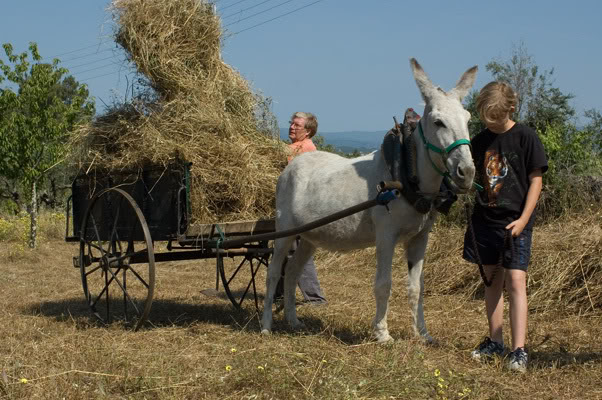
In my mind a pitchfork has long, pointy, not very sturdy tines, maybe only two of them, and a long handle. It's for pitching (lifting and moving) things like hay.

Like the one in the American Gothic painting...


It's for this sort of job...~


Personally I'd only call them pitchforks if they had two tines and if they had more I'd call them muck-forks, which are better suited for moving used animal bedding. The long pointy tines mean it's easy to slide them into heaps of stuff and they are strong enough to lift hay or animal bedding with manure, but they aren't suited for digging.

What sort do you have? Can we see a photo?

And what are you trying to dig into? Hard, compacted soil that hasn't been disturbed in forever? Or loose garden soil? What size roots are you trying to dig out? Is it essential they come out intact or are you trying to just get them removed completely? Getting the right tool and technique for the job is important. Especially for those of us who aren't as strong as others, and also for preservation of your tools. I've watched three grown men attempting to dig a hole in my land using my perfectly good spade with a seriously bad technique. They drove it down as far as they could, then all three of them piled onto the handle to push it back and lift the soil, which obviously didn't want to come up as it hadn't been disturbed before. And with enough effort they eventually succeeded in snapping the blade in half. If they'd started with a less ambitious attempt they could have dug out just a few inches, then moved the spade back and done another couple of inches behind it, then a few inches deeper, and they could have managed perfectly well, a lot faster, and left my best spade intact!

A digging fork (which also seems to be called a spading fork these days) would look more like this.


It has a shorter, sturdier handle. Stronger tines, closer together. But it would still break if you relied on brute force. Even when my other half is digging something out with a back hoe he will only go full tilt at the job if the ground is soft, otherwise he will nibble away at it rather than break stuff or fail.

And having said all that, when I was browsing amazon trying to find an image of a good digging fork, I see that most of them these days have 'pitchfork' in the description. So it's no freaking wonder that people are getting confused. Pitchforks are for pitching stuff, not for digging, despite what Amazon sellers seem to think.
 
master steward
Posts: 15248
Location: Pacific Wet Coast
9600
duck books chicken cooking food preservation ungarbage
  • Likes 12
  • Mark post as helpful
  • send pies
    Number of slices to send:
    Optional 'thank-you' note:
  • Quote
  • Report post to moderator
What Burra said! English is a much divided common language and many of us didn't grow up on a farm where we would have learned the difference!

We bought a smaller and larger heavy duty digging forks from Lee Valley Tools over 2 decades ago, after Hubby kept bending the tines of the typical garden fork I'd bought before we married. They have lasted well, never bent, but I'm not sure that quality is still available.

The closest I could see was this Lee Valley digging fork.

Many of their new tools are stainless steel, which can actually be more brittle than some alternatives, however, their guarantee used to be excellent.

Even with my sturdy one, technique is important:
1. I would make sure to moisten the soil starting several days in advance and adding a bit of water daily or twice/day.
2. I would push the fork in, they wiggle it back and forth and side to side, then lift it straight out, and do the same again beside your first plunge.
3. I wouldn't try to use the fork as a lever until I'd loosened the dirt all the way around in a complete circle, but I'm working in heavy clay.
4. I would also, as suggested above, consider that a transplant spade might be the better choice. If you want more roots, you just make the circle of digs further from the base of the plant

Here's an image of the heavy duty transplant spade from Lee Valley. I would read up about sharpening tools also...

 
Posts: 12
Location: PNW 8B
6
forest garden plumbing chicken
  • Likes 11
  • Mark post as helpful
  • send pies
    Number of slices to send:
    Optional 'thank-you' note:
  • Quote
  • Report post to moderator
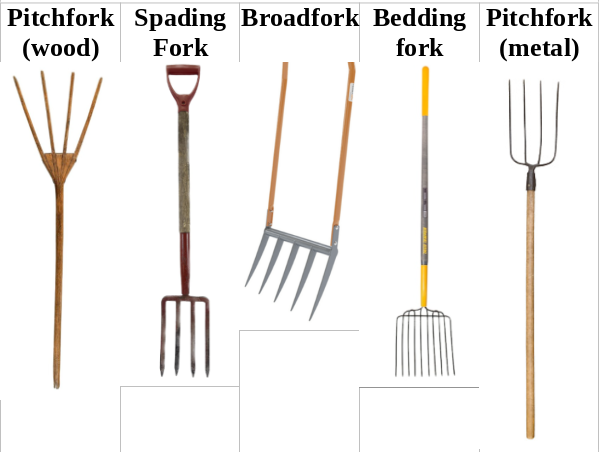
If you want to exert a lot of force on roots and stuff, I think you might be happiest with a broadfork. Pitchforks and bedding forks (which are the only Ames fork products that I'm seeing online at the moment) are way too flimsy to dig with. Spading forks... I guess some people like them, but I've never had much use for them; I find them a rather unhappy medium between a shovel and a broadfork. Broadforks let you use leverage to pull the tines, which are almost more like individual blades, through the soil. The broadfork is my go-to for getting dense clay loosened up enough to pull out the roots of things I'd rather not have in a particular garden bed.


also, fun fact, if you broadfork underneath a blackberry crown, it often lifts right out of the soil afterwards!
screenshot_20260503_142757.png
types of garden fork
 
Kevin Stanton
Posts: 41
Location: Minneapolis, MN
3
  • Likes 4
  • Mark post as helpful
  • send pies
    Number of slices to send:
    Optional 'thank-you' note:
  • Quote
  • Report post to moderator
I'm bending a digging/spading fork then, and a broad fork is too big to use in a forest when digging things like rhubarb roots
 
Posts: 10308
Location: a temperate, clay/loam spot on planet earth, the universe
3549
4
  • Likes 7
  • Mark post as helpful
  • send pies
    Number of slices to send:
    Optional 'thank-you' note:
  • Quote
  • Report post to moderator
We've always lived where a pry bar was a necessity for breaking new ground...for removing rocks at least.  I think a good one might hold up to your strength?

I'm confused as to whether you are trying to dig rocks, tree roots or rhubarb roots as you mention in your last post? maybe all of them?

I think that once the tines bend the first time the metal becomes more pliable and bends easier and easier.

re reading your first post I see you are talking about digging up plant roots.
This is in the forest?
 
pollinator
Posts: 77
Location: Zone 7b, 600', Sandy-Loam, Cascadian Maritime Temperate
61
  • Likes 7
  • Mark post as helpful
  • send pies
    Number of slices to send:
    Optional 'thank-you' note:
  • Quote
  • Report post to moderator
If you are just trying to eliminate these roots - not harvest, and the tool needs to be narrow and durable, I have a suggestion.
My Grandpa made a tool decades ago to be used as a kind of Spud (for peeling logs).
He basically welded an axe head onto a solid pry bar.  The thing is rather too heavy for easy use in peeling logs, so it sat for years.

Recently I have been employing it to sever big roots of brambles, dock, milk thistle, tree roots, and other such things.
Its weight coupled with the sharp edge makes it pretty useful for certain chores.
It doesn't get the whole root mass out as well as a sturdy digging fork or broadfork however.

It is tiring to use for my gangly frame, but it sounds like that would not be an issue for you.
I haven't seen tools of its kind for sale, but it wouldn't be difficult to make if you know a decent welder.

 
Steward of piddlers
Posts: 7653
Location: Upstate New York, Zone 5b, 43 inch Avg. Rainfall
4269
monies home care dog fungi trees chicken food preservation cooking building composting homestead
  • Likes 6
  • Mark post as helpful
  • send pies
    Number of slices to send:
    Optional 'thank-you' note:
  • Quote
  • Report post to moderator
A quick shameless plug to remind folks that Permies hosts a Gear Review Grid where permie people review a variety of products like tools.

I've had really good luck with my Metal Flat Shovel tackling really rocky spots on my property. If I really have to pry on something, I will break out a long pinch bar.
 
gardener
Posts: 589
Location: Wabash, Indiana, Zone 6a
289
hugelkultur monies forest garden foraging trees books food preservation bike bee writing rocket stoves
  • Likes 5
  • Mark post as helpful
  • send pies
    Number of slices to send:
    Optional 'thank-you' note:
  • Quote
  • Report post to moderator
Totally depends on what you are going to use it for. I've found a standard bedding fork works best for me, but I use it primarily to transfer wood chips into a wheelbarrow and to flip my hot compost piles. For the compost, I wish it didn't have as many tines as it does, but I need them all for when I throw chips. I'm not buying another one just to save a couple minutes flipping compost. Everything is a trade-off, and you can wind up with a shed full of tools you only use once or twice a year instead of five or six that you use all the time.

Jim
 
Kevin Stanton
Posts: 41
Location: Minneapolis, MN
3
  • Likes 2
  • Mark post as helpful
  • send pies
    Number of slices to send:
    Optional 'thank-you' note:
  • Quote
  • Report post to moderator

Judith Browning wrote:
I'm confused as to whether you are trying to dig rocks, tree roots or rhubarb roots as you mention in your last post? maybe all of them?
This is in the forest?


splitting rhubarb in an establishing food forest that some chop and drop trees are growing next to, on peatland (not quite a bog due to filling in after the last ice age).

George Ingles wrote:If you are just trying to eliminate these roots - not harvest, and the tool needs to be narrow and durable, I have a suggestion.


I'm collecting rhubarb roots for replanting to eventually have a 4ish acre rhubarb farm to pay me when I retire.

Jim Garlits wrote:Everything is a trade-off, and you can wind up with a shed full of tools you only use once or twice a year instead of five or six that you use all the time.
Jim


What if you use it for a few days every year?
 
Posts: 94
Location: Central Iowa, Zone 5b
25
personal care foraging urban chicken bike bee
  • Likes 4
  • Mark post as helpful
  • send pies
    Number of slices to send:
    Optional 'thank-you' note:
  • Quote
  • Report post to moderator
I love my solid steel fiskers shovel and I have a feeling there solid spade digger is probably pretty tough and affordable. Our soil is to hard so any kind of digging spade isnt gonna hold up sadly to the horsepower I want to apply. I grew up with these solid steel style tools and now I break all of the handles off of the wooden handled tools cause I'm used to being able to just use the shovel without having to check if I'm going to break it cause I took a full scoop of dirt. I have managed to break my shovel in our hard as rock heavy clay soil. But the bonus is then we welded it together and reinforced it! Yes my shovel weighs at least 15lbs now but we have a rack with everyone's favorite shovel. (There even all named, Mines called Groundbreaker) So nobody has to use my heavy shovel but I still get my preferred shovel!
 
Jim Garlits
gardener
Posts: 589
Location: Wabash, Indiana, Zone 6a
289
hugelkultur monies forest garden foraging trees books food preservation bike bee writing rocket stoves
  • Likes 2
  • Mark post as helpful
  • send pies
    Number of slices to send:
    Optional 'thank-you' note:
  • Quote
  • Report post to moderator
That’s a good question. If I was using it a lot during those few days, heck yeah.

Jim

Kevin Stanton wrote:
What if you use it for a few days every year?

 
I agree. Here's the link: http://stoves2.com
reply
    Bookmark Topic Watch Topic
  • New Topic